
A Complete Guide for Businesses
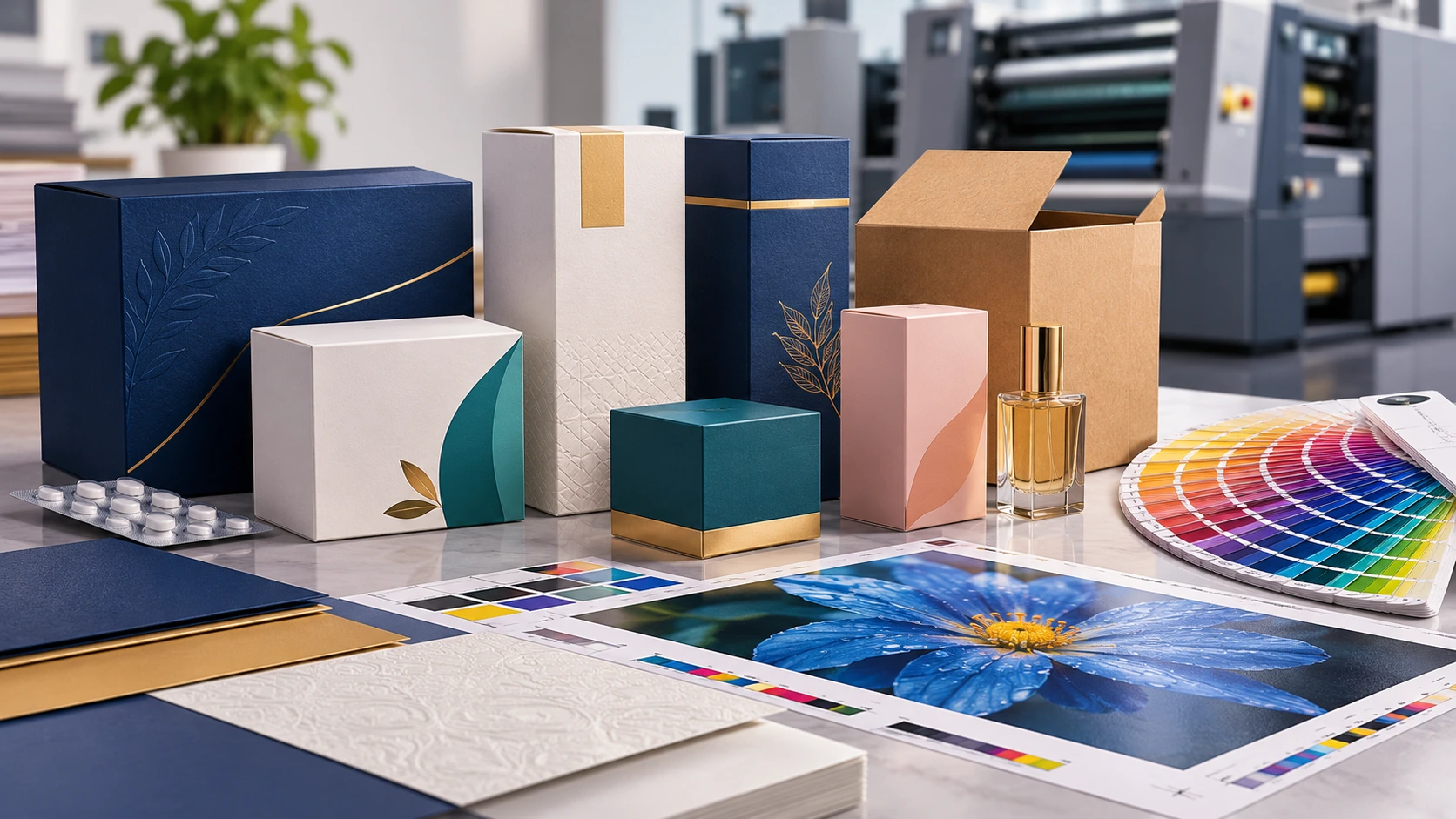
Looking for offset printing and packaging in Karachi? Explore printing methods, pharmaceutical and cosmetic packaging, specialty finishes and cost-effective solutions with Benison Printers (Pvt.) Ltd.
- Offset-printing-packaging-karachi
- Best offset printing company in Karachi
- Printing and packaging company in Pakistan
- Budget packaging in Karachi
- Pharmaceutical packaging manufacturers in Pakistan
- Custom packaging printing in Karachi
- Commercial offset printing
- Cosmetic and perfume packaging
- Metallized printing in Pakistan
- Premium product packaging
- Affordable packaging solutions in Karachi
Choosing the Right Printing and Packaging Partner
Packaging is more than just a way to protect a product. It represents your brand, communicates product information and creates the first impression for your customers.
For pharmaceutical companies, FMCG manufacturers, cosmetics brands and other businesses, choosing the right printing and packaging partner is an important production decision.
Businesses looking for offset printing in Karachi need more than competitive prices. They need consistent printing quality, suitable materials, accurate colours, reliable production planning and packaging that meets their product requirements.
At Benison Printers, we understand that every packaging project has different requirements. From commercial offset printing to specialised product packaging, the right solution depends on the product, intended use, quantity, design and budget.
In this guide, we explain the important things businesses should know before selecting an offset printing and packaging supplier in Pakistan.
1. What Is Offset Printing?
Offset printing is a commercial printing process in which ink is transferred from a printing plate to a rubber blanket and then onto the printing material.
It is widely used for producing commercial printed materials and packaging where consistent reproduction and production efficiency are important.
Offset printing is commonly used for:
Pharmaceutical and medicine packaging.
Cosmetics and perfume packaging.
Food and FMCG packaging.
Product inserts and promotional materials.
Brochures, catalogues and company profiles.
Magazines, annual reports and commercial publications.
One of the main advantages of offset printing is its suitability for medium and large production quantities.
Once the printing press is prepared and the required colours are registered, large quantities can be produced efficiently.
However, offset printing is not necessarily the most economical option for every job. Plate preparation, setup time, material wastage and order quantity all influence the final cost.
2. Offset Printing vs Digital Printing: Which Is Better?
Both printing technologies serve different purposes. Choosing the right method can help businesses control costs and achieve their required production quality.
Offset Printing
Offset printing is generally suitable for medium-to-large production quantities.
Advantages include:
Efficient production for larger quantities.
Consistent colour reproduction with proper press control.
Wide selection of suitable printing materials.
Compatibility with many commercial finishing processes.
Competitive per-unit costs when production volume justifies the setup.
Digital Printing
Digital printing transfers artwork directly to the printing system without conventional printing plates.
It is often suitable for:
Short production runs.
Urgent printing requirements.
Samples and prototypes.
Variable data printing.
Projects requiring frequent artwork changes.
Which Should You Choose?
For larger quantities of pharmaceutical boxes, cosmetics packaging and commercial printing, offset printing may provide better production economics.
For smaller quantities, urgent projects or product samples, digital printing may be more practical.
The best choice depends on quantity, artwork, material, finishing requirements and delivery schedule.
3. Packaging Printing for Pharmaceutical and Healthcare Companies
Pharmaceutical packaging requires particular attention to printing accuracy, product information and packaging specifications.
Medicine packaging often carries important information such as:
Product name and strength.
Ingredients and usage instructions.
Manufacturer information.
Batch and expiry details.
Barcodes and other identification information.
Storage and handling instructions.
The packaging must be designed and produced according to the customer's approved artwork and applicable product requirements.
A printing error involving product information, barcode readability or colour consistency can create serious operational problems.
Before approving bulk production, businesses should review artwork, dimensions, material specifications, printing samples and finishing requirements.
At Benison Printers, pharmaceutical packaging projects are approached with attention to the customer's specifications, artwork requirements and production needs.
4. Cosmetic, Perfume and Premium Product Packaging
In industries such as cosmetics, perfumes, personal care and supplements, packaging plays an important role in brand presentation.
Customers often judge a product's presentation before experiencing the product itself.
Premium packaging may involve:
Specialised paperboard selection.
High-quality graphic printing.
Metallic and metallized effects.
Hot/Cold foil stamping.
Embossing and debossing.
Matte or gloss lamination.
Spot UV finishing.
Special structural and visual designs.
Not every project requires expensive finishing.
A carefully selected material, balanced colour combination and practical box structure can create an excellent presentation without unnecessarily increasing packaging costs.
The important thing is to select finishing options that complement the product and fit the brand's positioning.
5. Budget Packaging in Karachi: How to Reduce Costs Without Compromising Quality
Businesses frequently search for budget packaging in Karachi because packaging can represent a significant part of their production costs.
However, the cheapest quotation is not always the most economical option.
A low initial price may involve unsuitable materials, excessive wastage, inconsistent printing or additional expenses during production.
Here are some practical ways to control packaging costs.
Select the Right Material
Paperboard selection should be based on the product's weight, intended use, packaging structure and required durability.
Using unnecessarily heavy material can increase costs. On the other hand, choosing material that is too light may affect packaging performance.
Optimise Packaging Dimensions
Even small changes in packaging dimensions can affect material consumption and production efficiency.
A properly planned design can help minimise unnecessary material usage.
Avoid Unnecessary Finishing
Foil stamping, embossing, special coatings and other finishing processes can enhance packaging presentation.
However, they should be selected according to the product's requirements and marketing objectives.
Plan Quantities Carefully
Offset printing involves preparation and setup costs.
Businesses should evaluate their expected requirements and consider suitable production quantities rather than making purchasing decisions based only on the lowest unit price.
Finalise Artwork Before Production
Late artwork changes can lead to additional preparation, delays and material wastage.
Approved artwork and specifications should be confirmed before bulk production begins.
The objective should be cost-effective packaging, not simply cheap packaging.
6. Metallized Printing and Specialised Packaging
Some products require packaging that stands out from conventional printed boxes.
Metallized printing and specialty finishing can help create distinctive visual effects for cosmetics, perfumes, promotional packaging and selected FMCG products.
Depending on the selected material and production specification, these projects may involve:
Metallic appearance.
Foil stamping.
Special surface finishes.
Combination of different printing effects.
Premium colour reproduction.
Specialised paperboard structures.
These processes should be evaluated during the design and quotation stage because material compatibility, finishing methods and production requirements can affect both cost and lead time.
7. Understanding the Packaging Production Process
A properly managed packaging project involves several stages.
Step 1: Requirement Discussion
The customer provides product details, packaging dimensions, quantities, artwork and intended application.
Step 2: Material Selection
Suitable paperboard and other required materials are evaluated according to the packaging specification.
Step 3: Artwork and Prepress
Artwork is reviewed for dimensions, layout, colour separation, text, barcodes, printing requirements and technical suitability.
Step 4: Sampling and Approval
Where required, samples or proofs are reviewed before the production order is released.
Step 5: Printing
The approved job proceeds through the selected printing process.
Step 6: Finishing and Conversion
Depending on the specification, the printed material may undergo lamination, foil stamping, embossing, die-cutting, creasing, folding and pasting.
Step 7: Quality Inspection
The finished packaging is checked against the approved specifications and relevant quality requirements.
Step 8: Packing and Dispatch
Approved products are packed and prepared for delivery according to the agreed arrangement.
Clear communication between the customer and supplier throughout these stages helps reduce avoidable errors and production delays.
8. How to Choose the Best Offset Printing Company in Karachi
Selecting a printing supplier should involve more than comparing quotations.
Before finalising a printing and packaging company, consider the following:
Production Capability: Does the supplier have suitable equipment and production arrangements for your particular job?
Industry Experience: Has the supplier worked with similar packaging applications?
Material Knowledge: Can the supplier recommend appropriate paperboard and finishing options?
Colour Management: Does the supplier have a defined process for reviewing colour proofs and monitoring printing consistency?
Quality Control: Are there clear inspection procedures for dimensions, printing, finishing and completed products?
Production Planning: Can the supplier realistically manage your required quantity and delivery schedule?
Communication: Does the supplier provide clear updates and respond to technical or commercial concerns?
The right printing partner should understand your requirements before recommending a solution.
9. Why Businesses Consider Benison Printers
Benison Printers works with businesses requiring commercial printing and specialised product packaging solutions.
Our areas of work include offset printing, digital printing and packaging applications for industries such as pharmaceuticals, cosmetics, FMCG and other product-based businesses.
We understand that every customer has different priorities.
Some businesses require economical packaging for regular production. Others require premium finishes, specialised materials or detailed printing specifications.
Our approach is to understand the project first, evaluate its technical requirements and recommend a suitable production solution.
We believe that good printing and packaging involve more than attractive artwork. Material selection, production planning, quality inspection and communication all contribute to the final result.
Whether you are sourcing pharmaceutical packaging, cosmetic boxes, premium product packaging or commercial printing, we welcome the opportunity to discuss your requirements.
10. Request a Printing and Packaging Quotation
Planning a new packaging project or looking for an alternative printing supplier in Karachi?
To receive a more accurate quotation, provide the following information:
Product and packaging type.
Required box dimensions.
Estimated order quantity.
Paperboard or material preference, if known.
Printing requirements and number of colours.
Required finishing options.
Approved artwork or reference sample.
Expected delivery schedule.
Delivery location.
Providing complete information helps the printing supplier evaluate the project and prepare a more meaningful quotation.
Contact Benison Printers to discuss your next printing or packaging requirement.
Frequently Asked Questions (FAQs)
1. Which is the best offset printing company in Karachi?
The right offset printing company depends on your production requirements, budget, required quality, material specifications and delivery schedule. Compare actual production samples, technical capabilities and quality-control procedures before selecting a supplier.
2. Is offset printing cheaper than digital printing?
Offset printing can be more economical for medium and large quantities because setup costs are distributed across more units. Digital printing may be more economical for smaller quantities because it does not require conventional plate preparation.
3. Where can I find budget packaging in Karachi?
Businesses should compare quotations from printing and packaging suppliers based on material specifications, dimensions, printing quality, finishing requirements and production quantities. The lowest price does not necessarily represent the lowest overall cost.
4. What types of packaging can be printed using offset printing?
Depending on material and machine specifications, offset printing can be used for pharmaceutical boxes, cosmetics packaging, perfume packaging, FMCG packaging and many other paper-based commercial packaging products.
5. What is the minimum order quantity for offset printing?
There is no single minimum quantity applicable to every printing project. It depends on the printing process, machine setup, material, dimensions and production requirements. Request a job-specific quotation.
6. What finishing options are available for premium packaging?
Common options include matte and gloss lamination, foil stamping, embossing, debossing and spot UV. The availability and suitability of each process should be confirmed for the specific project.
7. What information is required for a packaging quotation?
Suppliers generally need the packaging dimensions, quantity, material requirements, artwork, printing specifications, finishing details and delivery requirements.
8. Can packaging costs be reduced without affecting appearance?
Yes. Businesses can evaluate material thickness, box dimensions, printing methods and finishing options to identify savings while maintaining the required packaging performance and visual presentation.
Conclusion
Choosing the right printing and packaging solution requires a balance between quality, material selection, production efficiency and cost.
Offset printing remains an important option for businesses requiring commercial printing and larger-volume packaging production, while digital printing provides flexibility for shorter runs and specialised requirements.
For businesses searching for offset printing, pharmaceutical packaging or budget packaging in Karachi, the most valuable approach is to work with a supplier that understands the technical and commercial requirements of the project.
Benison Printers (Pvt.) Ltd. welcomes enquiries from businesses looking for practical.